Heritage Coffee Table, walnut + rosewood.
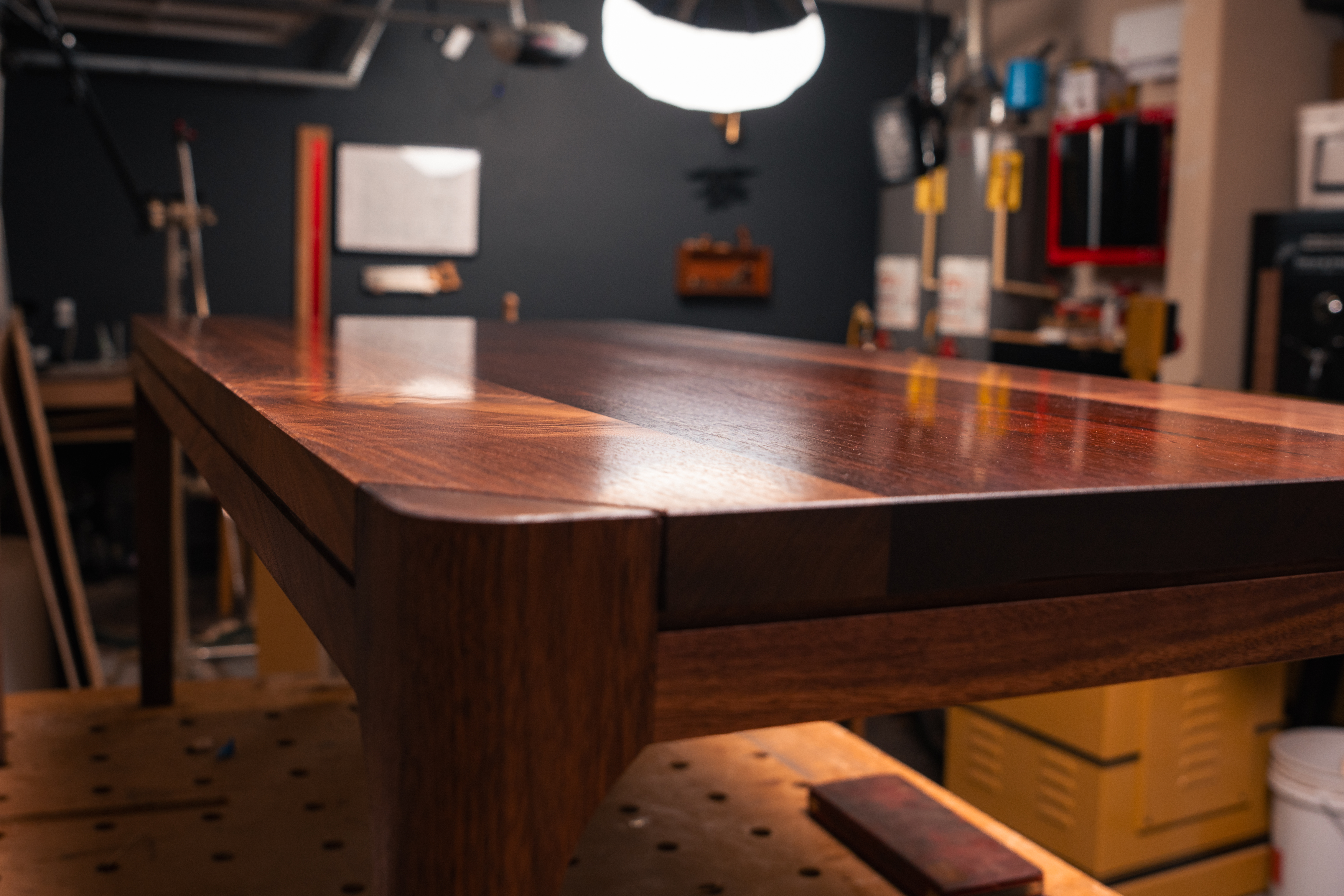
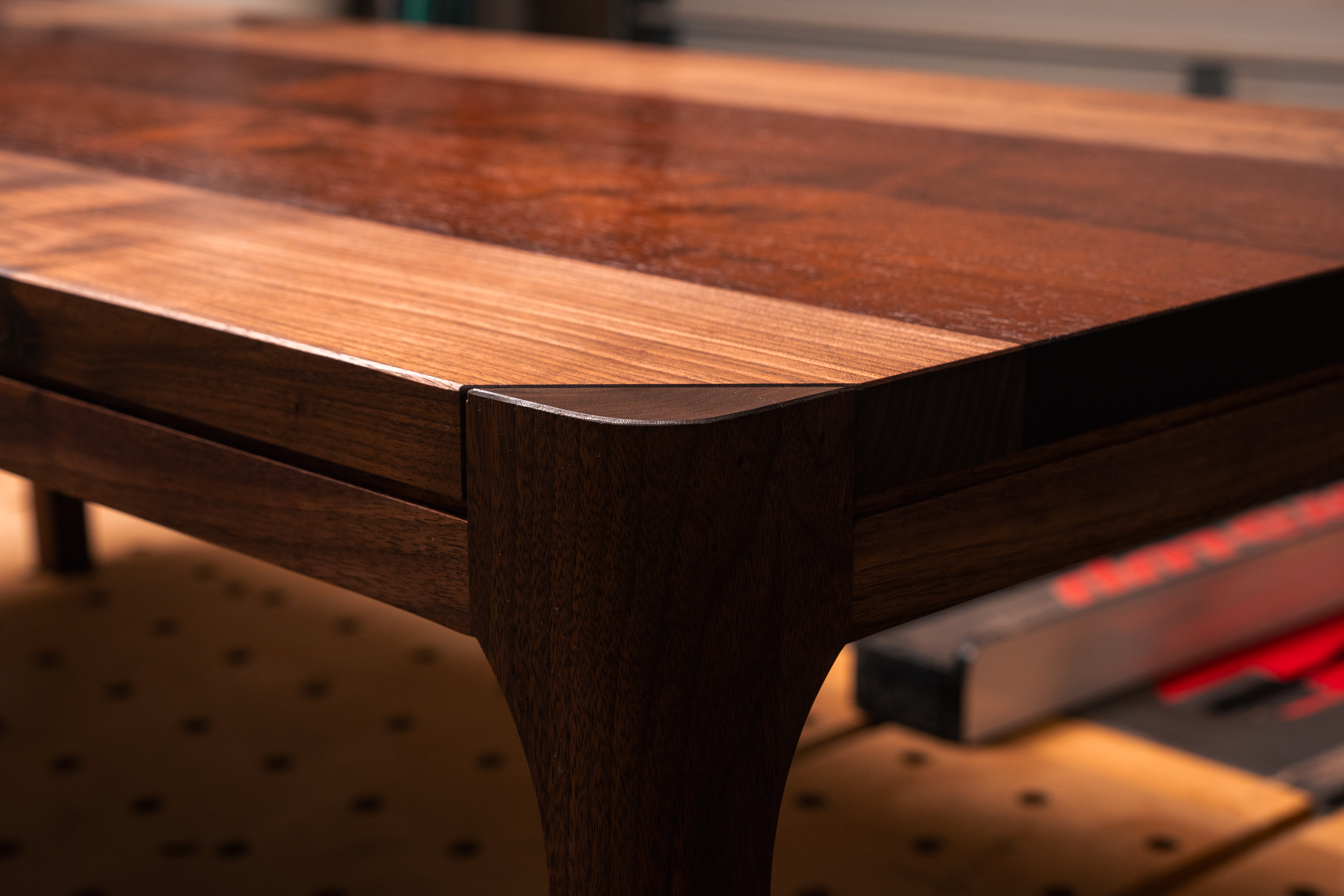
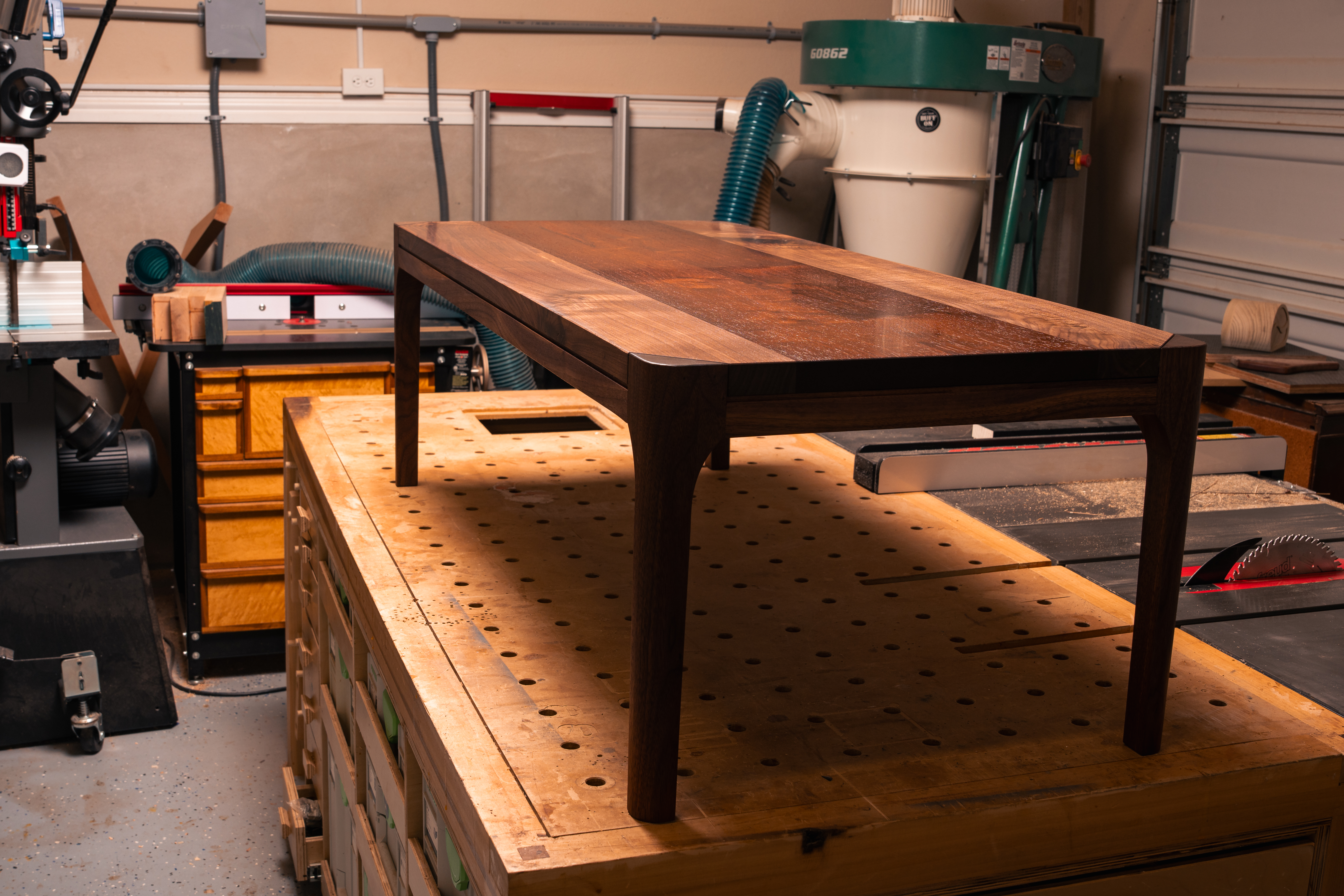
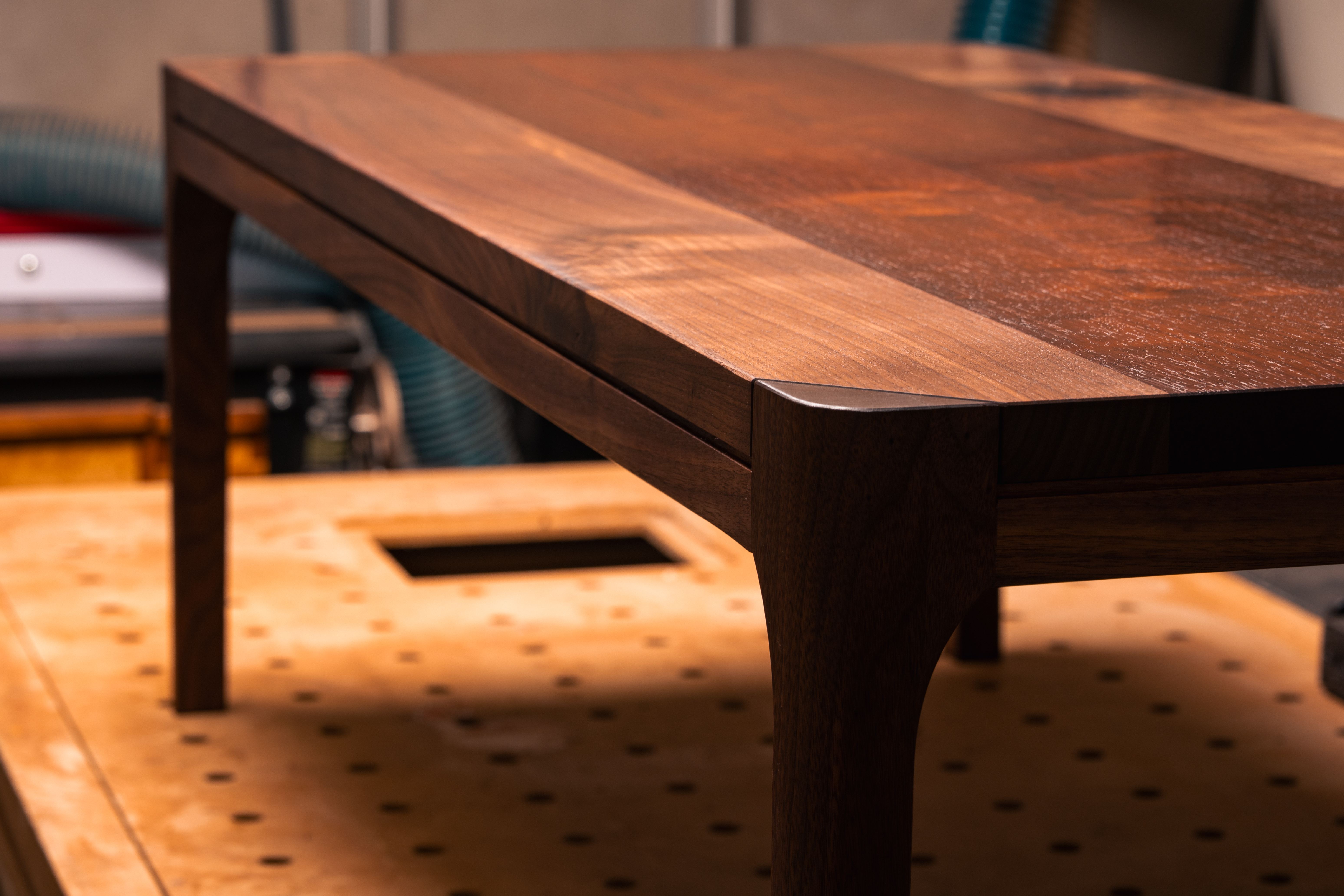
A low table with a planked top — American walnut bordered with a rosewood center plank, hand-shaped legs, hand-cut joints.
Walnut. Rosewood. Hand.
Two woods chosen for how they sit next to each other — and how they age.
Walnut, with rosewood
at the heart.
American black walnut bordered with a rosewood center plank. The leg-to-apron transition is hand-shaped to a soft pentagonal taper. Every joint cut and fit by hand. Finish: hand-rubbed oil.
Four views of the same piece.
Watch this one get built.
Built from his grandfather's rosewood.
The client came with two boards of rosewood his grandfather had bought fifty years ago. The grandfather was a woodworker. He bought the wood, set it aside, and never made anything from it. He passed before he did. The boards were the kind you can't buy anymore — old-growth rosewood, restricted from harvest decades ago. They had been waiting in a closet for the right piece.
Rosewood that old doesn't get measured in board feet. It gets measured in what it can't be used for. The decision came early: walnut on the outside, rosewood at the center. Walnut frames it. The rosewood draws the eye. Nothing wasted. The leg-to-apron transition was hand-shaped because the wood deserved that, too.
The table is in the client's living room now. His grandfather's wood, his choice of design, my hands in the build. Three generations of woodworking in a single piece. The kind of commission you don't forget.
The full technical.
Want one like this?
Commission a piece designed for your space — not a copy of this one, but built with the same hands, the same care, the same level of detail.